Negation with مش
مش
mesh
النفي بـ مش
el-nafy b-mesh
Learn how to say "not" in Egyptian Arabic using مش (mesh).
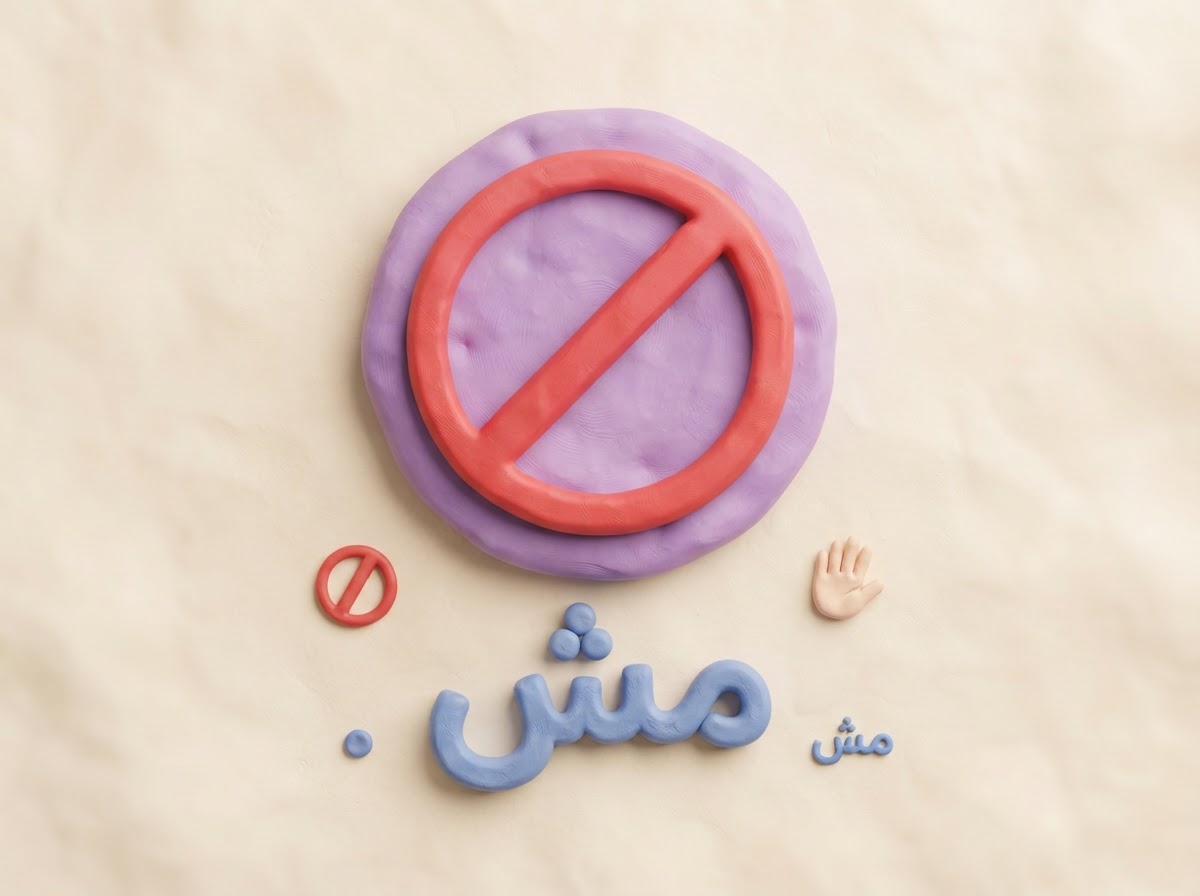
What does مش (mesh) mean?
مش
mesh
Meaning: not
مش (mesh) is one of the most common ways to say "not" in Egyptian Arabic. We use it to make a sentence negative.
أنا مش مدرس.
ana mesh modarres.
I'm not a teacher.
1. مش + Noun
Use مش (mesh) before a noun when you want to say that someone or something is NOT a certain person or thing.
أنا مش مدرس.
ana mesh modarres.
I'm not a teacher.
دي مش عربيتي.
di mesh 3arabeyti.
This isn't my car.
هو مش دكتور.
howa mesh doktor.
He isn't a doctor.
2. مش + Adjective
Use مش (mesh) before an adjective to say that someone or something is NOT a certain way.
هي مش تعبانة.
heya mesh ta3bana.
She isn't tired.
البيت مش كبير.
el-beit mesh kbeer.
The house isn't big.
الأوضة مش منورة.
el-oda mesh menawwara.
The room isn't bright.
3. مش + Present Tense Verb
In everyday Egyptian Arabic, مش (mesh) can also come before a present-tense verb to make the sentence negative.
أنا مش بحب القهوة.
ana mesh ba7eb el-ahwa.
I don't like coffee.
هي مش بتكتب الواجب.
heya mesh betekteb el-wageb.
She isn't writing / doesn't write the homework.
هو مش بيشتغل هنا.
howa mesh beyeshtaghal hena.
He doesn't work here.
Using مش (mesh) in a conversation
مش (mesh) is also very common when answering a question negatively or correcting information.
Speaker A
إنت بتذاكر عربي؟
enta betzaker 3araby?
Are you studying Arabic?
Speaker B
لا، مش بذاكر عربي. أنا بذاكر إنجليزي.
la2, mesh bazaker 3araby. ana bazaker Englizy.
No, I'm not studying Arabic. I'm studying English.
Important Note
مش (mesh) is very common in everyday Egyptian Arabic. It can be used with:
Noun
أنا مش مدرس.
ana mesh modarres.
I'm not a teacher.
Adjective
البيت مش كبير.
el-beit mesh kbeer.
The house isn't big.
Present Verb
أنا مش بحب القهوة.
ana mesh ba7eb el-ahwa.
I don't like coffee.
مش (mesh) vs مفيش (mafeesh)
Meaning: not
Use it to make a person, thing, description, or present-tense sentence negative.
أنا مش مدرس.
ana mesh modarres.
I'm not a teacher.
البيت مش كبير.
el-beit mesh kbeer.
The house isn't big.
أنا مش بحب القهوة.
ana mesh ba7eb el-ahwa.
I don't like coffee.
Meaning: there isn't / there aren't
Use it when something does not exist or is not available.
مفيش قهوة.
mafeesh ahwa.
There isn't any coffee.
مفيش كراسي.
mafeesh karasy.
There aren't any chairs.
Do NOT confuse مش (mesh) = not, with مفيش (mafeesh) = there isn't / there aren't.
Another way to negate verbs
Egyptian Arabic also has another common way to negate verbs using:
ما بحبش القهوة.
ma ba7ebsh el-ahwa.
I don't like coffee.
This is ONLY a preview. You will learn this pattern in a separate Grammar Bite later.
Quick Check
1Which sentence means: “I'm not a teacher.”
2Which sentence means: “The house isn't big.”
3Which sentence means: “I don't like coffee.”
4Which one means: “There isn't any coffee.”
5Which sentence is a correct negative present-tense sentence?
Ready to practice negation?
Practice GrammarYour Turn
Make the sentence negative using مش (mesh).
Positive
أنا مدرس.
ana modarres.
I'm a teacher.
Positive
البيت كبير.
el-beit kbeer.
The house is big.
Positive
أنا بحب القهوة.
ana ba7eb el-ahwa.
I like coffee.